


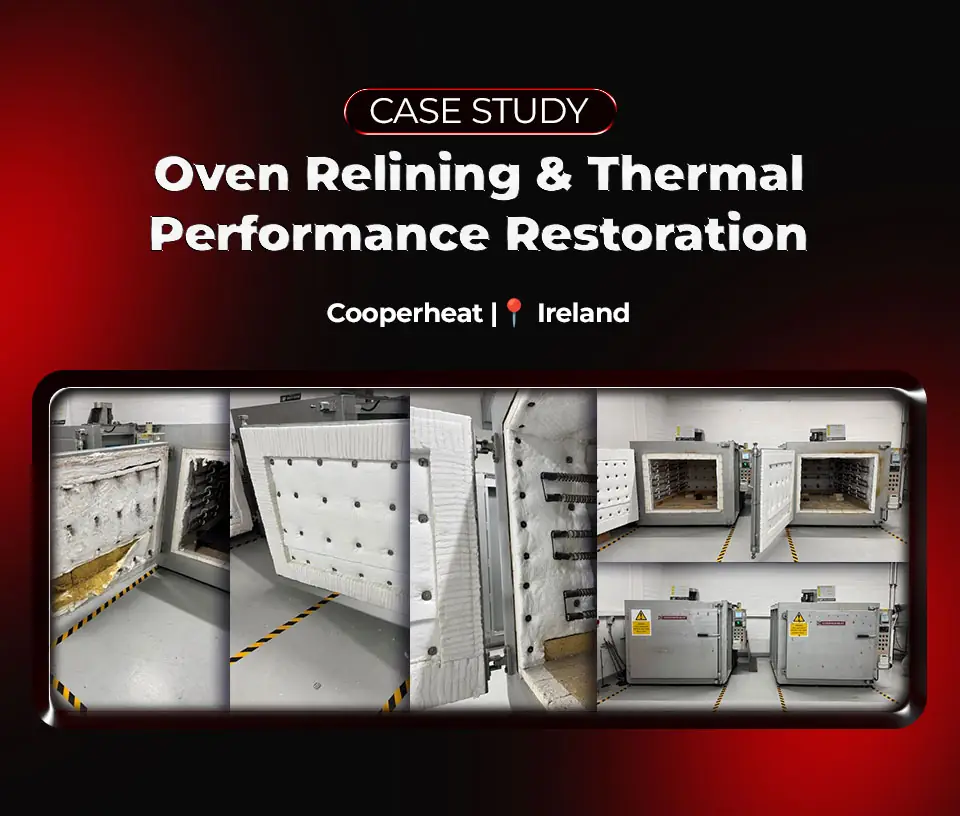
Restoring heat treatment ovens for aerospace aluminium components.
Client: Aerospace Industry, west of Ireland
Service: Oven Relining & Door Repair
Duration: 3 days on site
The Challenge
The customer heat treats aluminium aircraft components manufactured for major aerospace manufacturers, including Boeing and Airbus, where temperature control and uniformity are critical to the process. After noticing a decrease in oven efficiency, they reached out to Cooperheat for a repair solution to get their furnace back to optimal operating parameters.
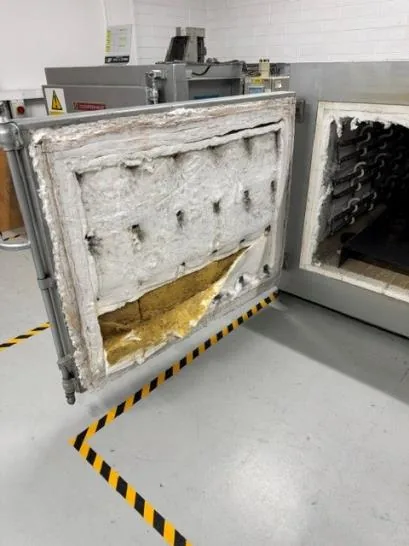
The door seals had given up, the internal linings were breaking down, and the heat loss was showing on the paintwork outside. Corrective action was needed to bring the equipment back to the required performance standards.
Our Approach
The Cooperheat team completed the work on site in just 3 full days, rebuilding the doors and relining the oven interior.
Rebuilding the Doors
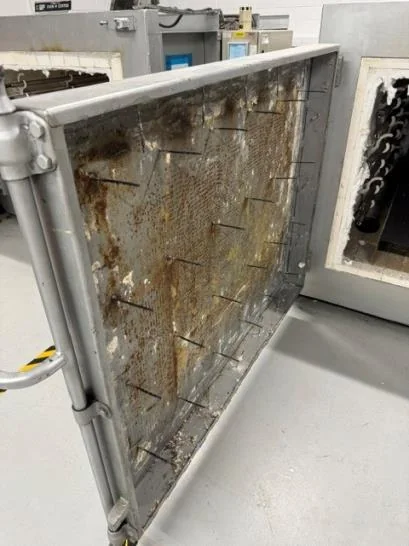
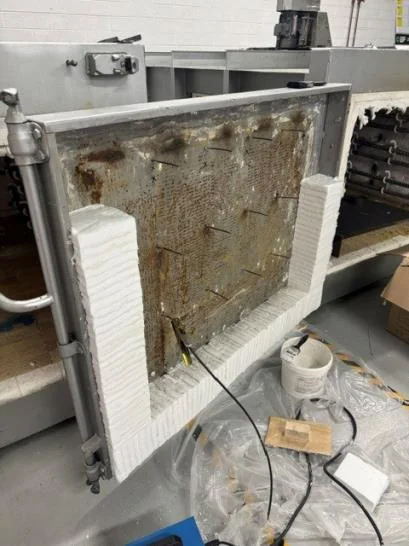
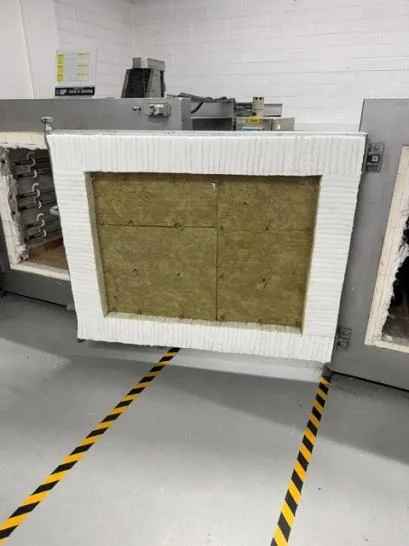
- Stripped both doors back to bare steel, removing the existing door lining and insulation
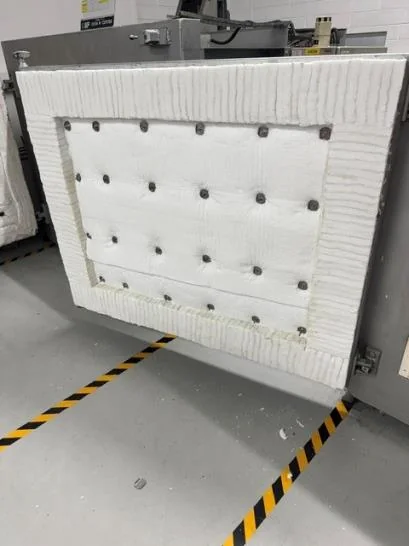
- Cut off every old anchor pin and welded new pins in their place
- Installed 75 mm Rockwool board as the core of each door panel, then closed the face with an overlapping layer of Superwool
- Aligned the doors to address heat loss and improve temperature uniformity
Relining the Interior
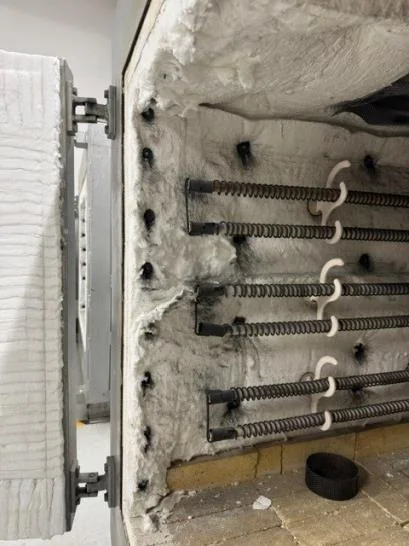
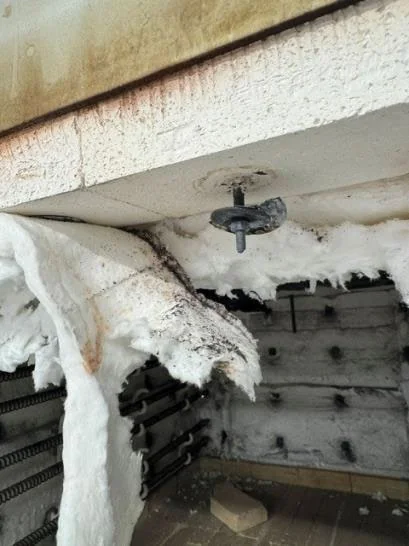
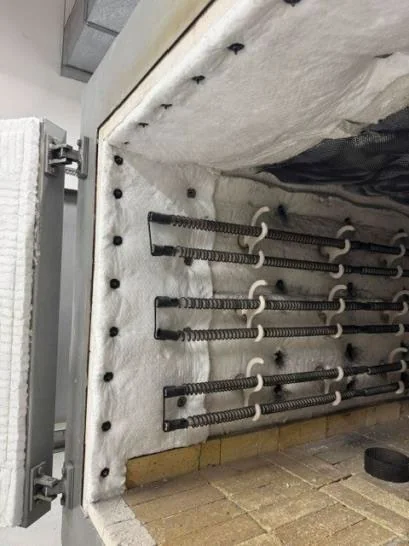
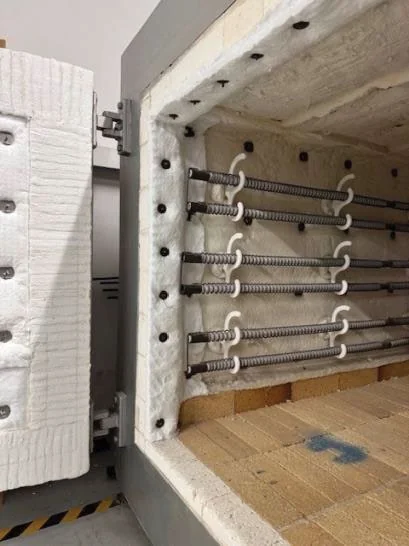
- Cut the old internal lining back to the fire brick
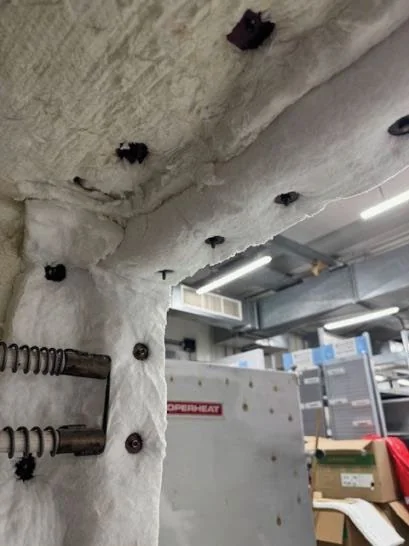
- Cleaned and trimmed the brick pins, and fitted new speed fix washers to pull the brickwork tight
- Fitted a fresh layer of Superwool to form the new internal seal, fixed to the brick with penny washers and stainless M5 nuts
- Bagged and sealed all waste insulation on site for controlled disposal
The Outcome
In just three days on site, the customer received fully rebuilt and realigned doors, a new internal lining and seal, and an oven back to the performance standards their aerospace work demands. The ovens operate across a temperature range of 120°C to 600°C, with highly controlled heat treatment cycles: components can be exposed to temperatures of up to 550°C for two hours before being transferred to a second oven at 120°C for 25 hours.
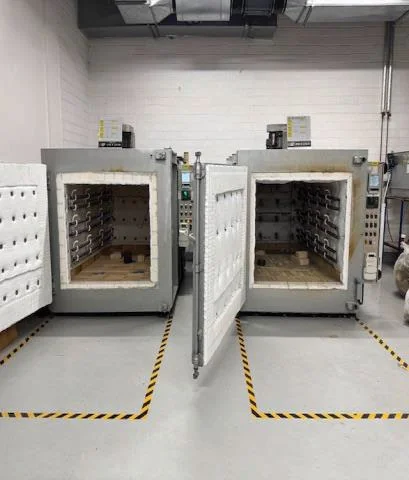
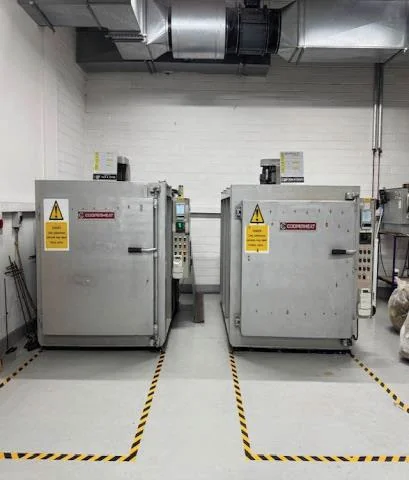
The result? A very happy customer.
Why Oven Lining Condition Matters
An oven’s insulation lining and door seals hold the heat inside the chamber. As they wear, heat escapes, the oven works harder to hold its setpoint, and temperature uniformity across the load suffers; heat showing on the outer casing is often the first sign. For aerospace heat treatment, that makes a worn lining more than an efficiency problem. Relining and resealing restores the oven to its required performance without replacing the equipment.
Another project delivered by Cooperheat, the Home of Heat Treatment Equipment since 1957.